
The science
Not Another Personality Test
Assessment
What It Is
The Troutwine Athletic Profile (TAP) is the most validated athletic psychological assessment in existence—a specialized tool designed specifically to evaluate mental traits that drive performance under pressure.
Why It Matters
Generic personality tests (MBTI, DISC, StrengthsFinder) weren't designed for performance prediction. TAP was purpose-built to answer one question: What psychological characteristics separate champions from everyone else?
Evidence
The Validation
Navy SEAL Study (2006–2007)
429 BUD/S candidates assessed
TAP predicted SEAL graduation with 92% accuracy
Only 20% normally complete the grueling 6-month training
Result: TAP identified future SEALs better than any previous methodology
NFL & Professional Sports
Used by multiple Super Bowl-winning organizations
Tom Brady's 2000 NFL Combine TAP assessment showed characteristics that predicted his legendary mental toughness
Contributed to talent evaluation for 11 Super Bowl championships, 2 World Series, 1 NBA Championship
Corporate Applications
Ford Motor Company: Predicted car sales performance within 2 units monthly
Sprint Corporation: Executive development and team building
Multiple Fortune 500 consulting engagements
The Same Assessment That Identified Tom Brady
This is Tom Brady's authenticated TAP answer sheet from the 2000 NFL Combine. The psychological characteristics revealed in this assessment predicted the mental toughness that would define one of the greatest careers in NFL history.
Now this same validated science powers TAP Coach, making championship-level psychological insights accessible to athletes at every level.
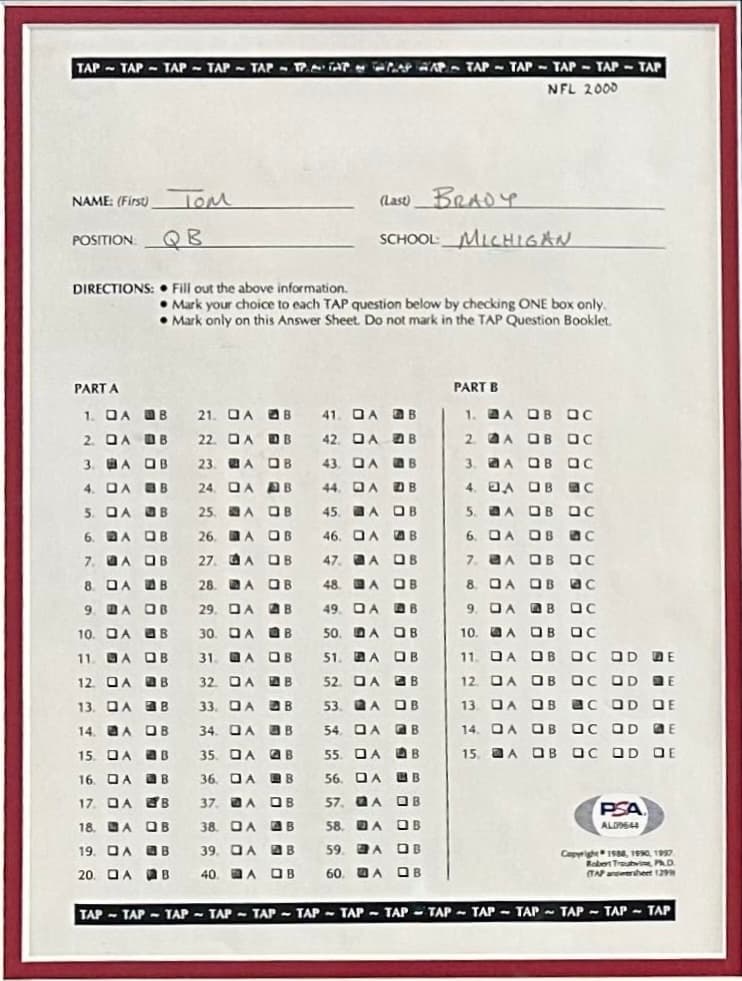
Tom Brady's TAP Assessment · 2000 NFL Combine
Trait model
The 14 Traits That Matter
7 Performance Traits
Grit
Psychological stamina and resilience; the "battery meter" for the mind
Confidence
Self-assurance and belief in one's abilities under pressure
Composure
Remaining calm and focused when stakes are high
Decisiveness
Making quick, committed decisions without hesitation
Focus Speed
Rapidly shifting attention where it needs to be
Adaptability
Adjusting to changing game situations and challenges
Motivational Drive
Sustaining effort and energy toward long-term goals
7 Personal Traits: Characteristics affecting relationships, coachability, team dynamics, and how athletes interact with coaches and teammates
The 8 TAP Types: Psychological archetypes detailing individuals' competitive behavior, feedback processing, and team functioning
Emotional Quotient (Emotional Intelligence), the skill of understanding and managing one's own and others' emotions for better relationships and success.
AI layer
From Assessment to Action
TAP assessment results alone are valuable—but static. The breakthrough is what happens next.
Our AI coaching layer:
Analyzes your complete TAP profile (14 traits, type matches, 100+ data points)
References 500,000+ athlete profiles to identify patterns
Applies 40 years of sports psychology principles
Considers your specific sport, position, and situation
Delivers personalized strategies that work for YOUR mental makeup
This isn't generic advice. When you ask "How do I handle pressure better?" your TAP Coach knows whether your pressure issues stem from perfectionism (high Grit, low Confidence) or external validation needs (Musketeer Type's high Affiliation)—and tailors strategies accordingly.
The crisis
The Declining Mental Performance Crisis
19%
Drop in Grit scores since 2017
271,158 athlete sample
15%
Decline in Confidence
Over the same period
The Opportunity
Athletes who develop their mental game gain competitive advantages that physical training alone cannot provide. Our technology makes this development accessible to everyone, not just elite programs with sports psychologists on staff.